

Petal to Plate: Cooking with Edible Flowers
- Oct 2, 2024
- 3 min read
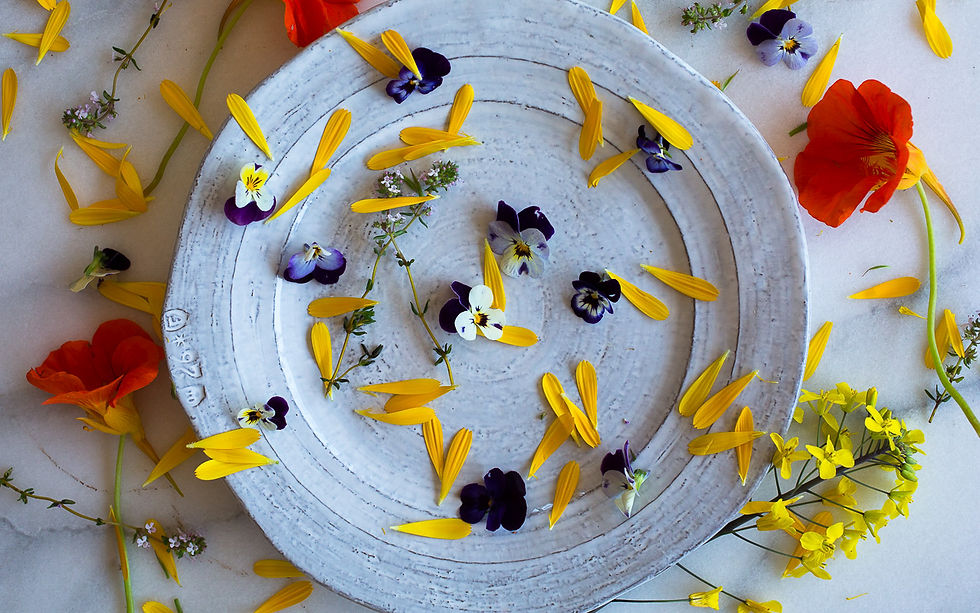
You may have seen edible flowers used as delightful garnishes, petite pansy or dahlia petals atop a decadent cake or a colourful variety of blooms decorating a dish. However, modern cuisine has discovered that these vibrant plants offer much more than just decoration. Edible flowers have a rich history of culinary use and continue to transform dishes with their unique flavours and sophistication. Whether you're a seasoned gourmet seeking new experiences or an aspiring home chef curious about why chefs rave about them, the beauty and potential of edible flowers are worth exploring.
Edible flowers are a delightful addition to any dish, lending a unique visual and flavourful touch. From chrysanthemums to pansies, the possibilities are endless. Whether you're looking to add flair to a salad, enhance a dessert, or experiment with a unique ingredient, edible flowers can elevate both the flavour and presentation of your dishes.

Roses and Lilacs: Due to their sweetness, these are among the most popular flowers incorporated into dishes. They make a perfect addition to any sweet treat, such as pies, cookies, ice cream, and even cocktails.
Hibiscus: Known for its stunning pink hue, this flower is used mainly for extracts, teas, and supplements that people traditionally believe contain medicinal properties. Its tart, cranberry-like flavour would refresh any beverage or dessert.
Nasturtium and Calendula: Nasturtiums have a spicy, peppery kick and are a common addition to summer salads. This flower, along with calendula, makes a great garnish for pizza and is also known to enhance the taste of roasted chicken, pancakes, and buttercream frosting. Truly a dynamic duo!

Borage: Apart from the pretty shade of blue, this herb, also known as starflower, is popularly used in cocktails, sour cream, and raw salads due to its fresh taste. Borage flowers and leaves can be infused into beverages.
Chive Blossoms: With a picturesque lavender colour and a sweet taste, chive flowers are typically added to omelettes and soups for a good balance of sweet and savoury. They can also beautifully decorate any plate and make an ideal ingredient for flavouring vinegar.
Chamomile: The healing herb chamomile has almost infinite applications beyond tea. Dried chamomile is infused into salad dressings, marinades, and vodka for an earthy, honey-like taste. Chamomile’s calming properties make it popular for bedtime teas and soothing desserts.
Garden Pea Blossoms: These flowers can be used in a variety of ways in the culinary world. From garnishing pasta, tacos, and other dishes to decorating cakes and candies, pea blossoms are appreciated in various cuisines and cooking styles.
What are some of their benefits?
One critical reason edible flowers are blooming in popularity is their nutritional and health benefits. Evidence points to these natural ingredients being abundant in minerals like magnesium, phosphorus, and potassium. Furthermore, some studies also suggest that these edible flowers can offer anti-inflammatory, anti-cancer, and antioxidant properties, among many other things. So, not only can they beautify a meal, but they can also provide some of the most vital minerals the human body needs.
Key Notes
While the world of edible flowers is fascinating, it's important to exercise caution. Some flowers are dangerous to consume, so educating yourself before experimenting is crucial. Look out for poisonous types and contamination, such as toxic elements within a flower's soil. Therefore, the best way is to research what is safe to eat.


Comments